By Adela Madyane – The Nature News, Kigoma
As Tanzania and other developing nations prepare to submit funding requests to the Loss and Damage Fund (FRLD) this December, sharp concerns are emerging over the fund’s capacity to deliver timely and equitable support for climate-induced disasters. Experts and civil society actors argue that the fund, launched to address irreversible climate impacts, is falling short of its mandate.
Climate finance analysts estimate that by 2030, developing countries will require between $200 billion to $400 billion annually to respond to loss and damage caused by extreme weather events—most of which stem from emissions by industrialized nations. Yet, the FRLD board has allocated only $250 million for its first funding cycle (2025–2026), equivalent to TSh 612.6 billion, a figure widely criticized as inadequate.
“This is a drop in the ocean,” said Pendo Mwakisimba, Director of CAN Tanzania, speaking at the ongoing COP30 summit in Brazil. “There’s a glaring gap between promises and delivery. The world pledges billions, but what reaches affected communities is minimal.”
According to CAN, developing countries need $387 billion annually (TSh1.006 trillion) until 2030. In contrast, only $27.5 billion (TSh71.5 trillion) was disbursed in 2022—less than 10% of the estimated need.
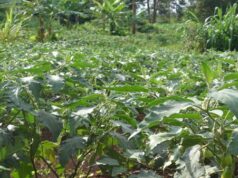
In Tanzania, regions such as Kigoma, Simiyu, and Rufiji experience recurring floods, droughts, and land degradation, resulting in annual costs costing the country over TSh500 billion to the county.
Data from the Tanzania Climate Action Network (TCAN) indicates that over 100,000 people were displaced between 2020 and 2024 due to climate-related disasters. (Clarification needed: Are TCAN and CAN separate entities or the same organization?)
Beyond economic losses, communities face cultural and ecological erosion. South Africa reported irreversible damage to indigenous knowledge and agricultural land, while Mauritius noted that climate disasters in 2024 wiped out 0.07% of its GDP.
Mauritius plans to use FRLD funds to support agriculture, fisheries, health, and housing, and to compensate citizens for lost property, livelihoods, and lives. The country also aims to strengthen emergency food and supply centers.
Harjeet Singh, Director of India’s Satat Sampada Climate Foundation, cited Cyclone Melissa in Jamaica, which caused up to $7 billion in damages, as evidence of the fund’s slow response.
“Three years after its approval, the fund is still not operational. That’s unacceptable,” Singh said. “FRLD must deliver justice through rapid, community-centered mechanisms.”
Legal expert Thomson Msemwa of Msemwa Law Chamber emphasized the need for a human rights-based approach
“Climate impacts have destroyed lives. The fund must uphold human dignity and respond with urgency,” he urged
The International Court of Justice (ICJ) has affirmed that climate change constitutes a violation of human rights, reinforcing calls for the FRLD to operate with transparency and accountability.
Environmental and human rights advocates are urging COP30 member states to demand reforms in the fund’s governance and financing model.
“The fund must reflect the scale of the crisis,” said Adrian Eustace of KIYADO. “Communities and frontline organizations need timely support. Rich nations must fulfill their financial obligations.”
Eustace pointed to the destruction of port infrastructure in Ujiji, Kibirizi, and Kasanga along Lake Tanganyika—critical to local economies and costly to rebuild—as a stark example of unmet needs.
He added that financing should not increase debt burdens and must reflect historical responsibility for emissions.
Matokeo Justin, an environmental advocate, echoed the call for debt-free public financing. “Rich nations have the capacity; they must stop supporting polluting industries and instead fund climate justice through equitable and solidarity-based mechanisms,” said Justin