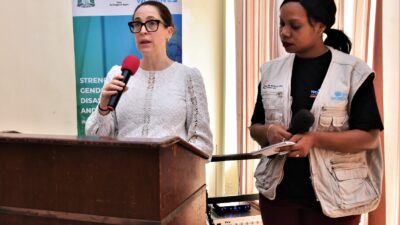

By Prosper Kwigize – Nature News Tanzania
In the forests of western Tanzania, once alive with the pant-hooting calls of chimpanzees, an unsettling quiet is taking hold. At Gombe Stream National Park, the birthplace of Dr. Jane Goodall’s groundbreaking research, the silence is no longer poetic. It is a warning.
Once a global symbol of coexistence between humans and great apes, Gombe now sits at the center of a widening crisis that links deforestation, poverty, displacement, climate change, and public health. As forests shrink, chimpanzees are disappearing and with them, a critical buffer between wildlife, ecosystems, and human disease.
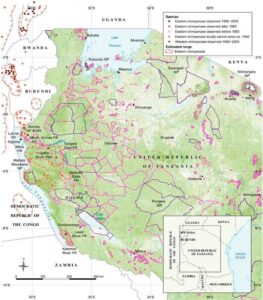
Tanzania is a country of about 65 million people and is estimated to have only about 2,500 chimpanzees left. Shockingly, 75 percent live outside protected areas, according to the United Nations great apes Conservation Partnership, leaving them vulnerable to deforestation, poaching, and human encroachment.
When the Forest Goes Silent
Chimpanzees are among the rarest mammals on Earth and play a crucial role in maintaining forest ecosystems by dispersing seeds and influencing vegetation patterns. In many African cultures, they are also woven into stories of human origins, creatures whose voices signal life and balance in the forest. But in western Tanzania, those voices are fading.
Satellite data from Global Forest Watch indicate that between 2001 and 2023, Tanzania lost more than 2 million hectares of tree cover, this is the size of Wales for comparison. The damage includes forest buffers crucial for chimpanzee migration. Much of this loss occurred around Lake Tanganyika, Gombe, and the Shuza Mountains, the last strongholds of the country’s great apes.
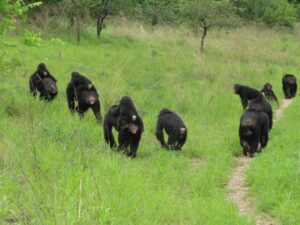
According to NASA satellite images and video, Kigoma, especially in the Gombe mountains and the surrounding area of the reserve, is experiencing a decline or loss of natural forests, which is contributing a decrease in shelter and food for apes, thus forcing them to flee to unsafe areas in search of food, where they are often then attacked
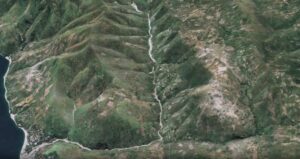
Based upon NASA imagery, the wildlife officer of the Kigoma District Council, Mr. Alfred Msangi, admits that the increase in population has encouraged illegal logging, mountain farming, illegal burning and illegal hunting, thus causing negative impacts on the conservation sector of primates, especially the Gibbon.
According to Kigoma District authorities, about 2% of the 10,030-hectare Gombe–Burundi chimpanzee corridor has already been destroyed by farming, charcoal production, and settlement. District environmental officer Mr. Vicent Muhazi estimates that 7.5% hectares of chimpanzee habitat are lost annually across Gombe, Shuza, Sabha, Mgongo, and Kavula hills.
“Years Pass Without a Sound”
According to the Natural Resources and Tourism Officer of the Kigoma District Council, Mr. Vicent Muhezi, the Council has set for itself several plans to improve the environment by removing invaders from protected forests to restore natural vegetation and increase wildlife, especially apes, whose sounds are also an attraction for the community and tourists visiting the reserve

Mr. Muhezi admits that, currently, great apes are facing the threat of extinction due to the increasing loss of habitat and food in the Gombe Mountains Reserve and the threat of infectious zoonotic diseases transmitted from humans to animals
“Personally, it hurts me to see rare animals, especially the chimpanzee, in danger of extinction in the world. These are rare animals that are similar to humans. They are completely harmless and help the nation earn income. Killing a chimpanzee is the same as killing a human. The chimpanzee’s voice is entertainment for us and an indicator of life in the forests. We must preserve them for the future,” Muhezi explained, clearly emotional.

For communities living along the park’s edge, the loss is deeply personal.
“We used to hear chimpanzees every morning from the hills,” says Moshi Batumunwa, a farmer near Gombe and newly elected councilor for Mwamgongo Ward. “Now, years pass without a sound. Even with tree-planting programs, the forests are shrinking, and the animals are moving away or dying.”
Batumunwa, a former village chairperson in Bugamba, recalls a time when wildlife corridors were respected. He even remembers gorillas passing through village farms and animals. Residents were instructed to gently chase them back into the forest.
“We did it because we understood their value,” he says. “They brought benefits to the nation and development to our villages.”
Seventy-year-old Issa Tumuza, a resident of Kilemba village near the Gombe and Shuza mountains, confirms the change.
“From the 1960s to the 1990s, this area was full of apes,” he recalls. “Today, many young people have never seen or heard of a chimpanzee. This is not good for the ecosystem or for us.”
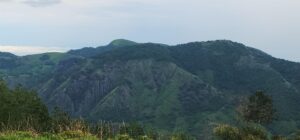
Tumuza insists that chimpanzees are harmless to humans, and that even their arrival in the past in our farms was due to a lack of food in the forests following environmental degradation.
“We humans are the cause of problems for Chimpanzee due to destroying their habitats and the forests that produce their food, they eat fruit now they would be getting it within their areas they would not have entered the village where they encounter mangroves, we are responsible for changing their behavior,” Tumza says.
“Five years ago we used to see or hear Chimps and other apes in the forests nearby our village, but now there are none, we suspect that they may have been killed or have moved further away, now the community especially the youth will undoubtedly lose history and researchers will miss the opportunity to use them in their research,” he maintains.
A Population in Freefall, 5 more Chimps lost
Conservationists warn that the decline is accelerating.
According to Tanzania National Parks Authority (TANAPA), Gombe was home to about 300 chimpanzees in 1980 and 90 in 2023. Today, researchers reported that only 85 remain in the park.
Sila Mbise, a conservationist and ecologist from TANAPA said that Gombe National Park supports an estimated population of approximately 85 chimpanzees. However, extensive deforestation in areas surrounding the park poses a serious threat to their long-term survival.
“At present, only one functional wildlife corridor remains, linking Gombe to the Burundi border through a network of village forest reserves,” Mr. Mbise notes. “This corridor is under increasing pressure from deforestation driven by agricultural expansion, human settlement, and immigration from Burundi.”
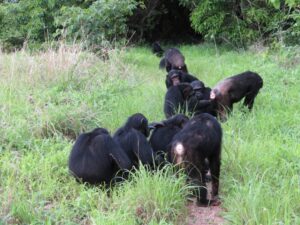
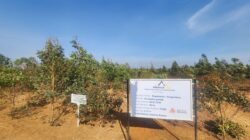
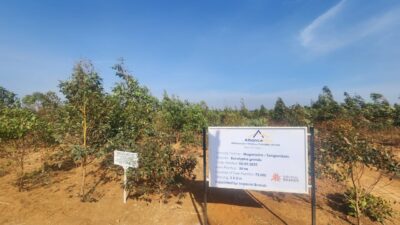
Efforts to address forest loss are being implemented by Gombe National Park through its Community Relations Department, which promotes afforestation by supporting community-based native tree nurseries outside the park. Similar initiatives are also undertaken by the Jane Goodall Institute through its Roots & Shoots program.
Despite these efforts, the current rate of afforestation remains insufficient to counterbalance ongoing deforestation, placing the park under increasing ecological pressure and creating uncertainty for chimpanzee survival.
“Therefore, additional and coordinated conservation actions are needed to prevent the extinction of chimpanzees in Gombe. The major threats to chimpanzees include disease transmission and increased social aggression, all of which have been linked to the small size of the reserve,” Mbise says. He notes that the reserve has about 35 square kilometers of suitable habitat for chimpanzees and there is little access to suitable habitat beyond the reserve boundaries”.
Disease outbreaks, habitat loss, human-wildlife conflict, and climate stress are all taking their toll. Fragmented forests have split chimpanzee troops, thus increasing aggression and limiting their access to mates. These threats present consequences for highly social animals whose behavior closely mirrors that of humans.
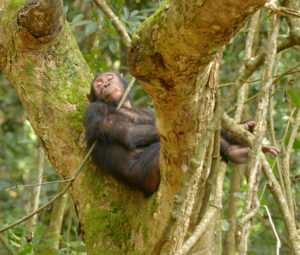
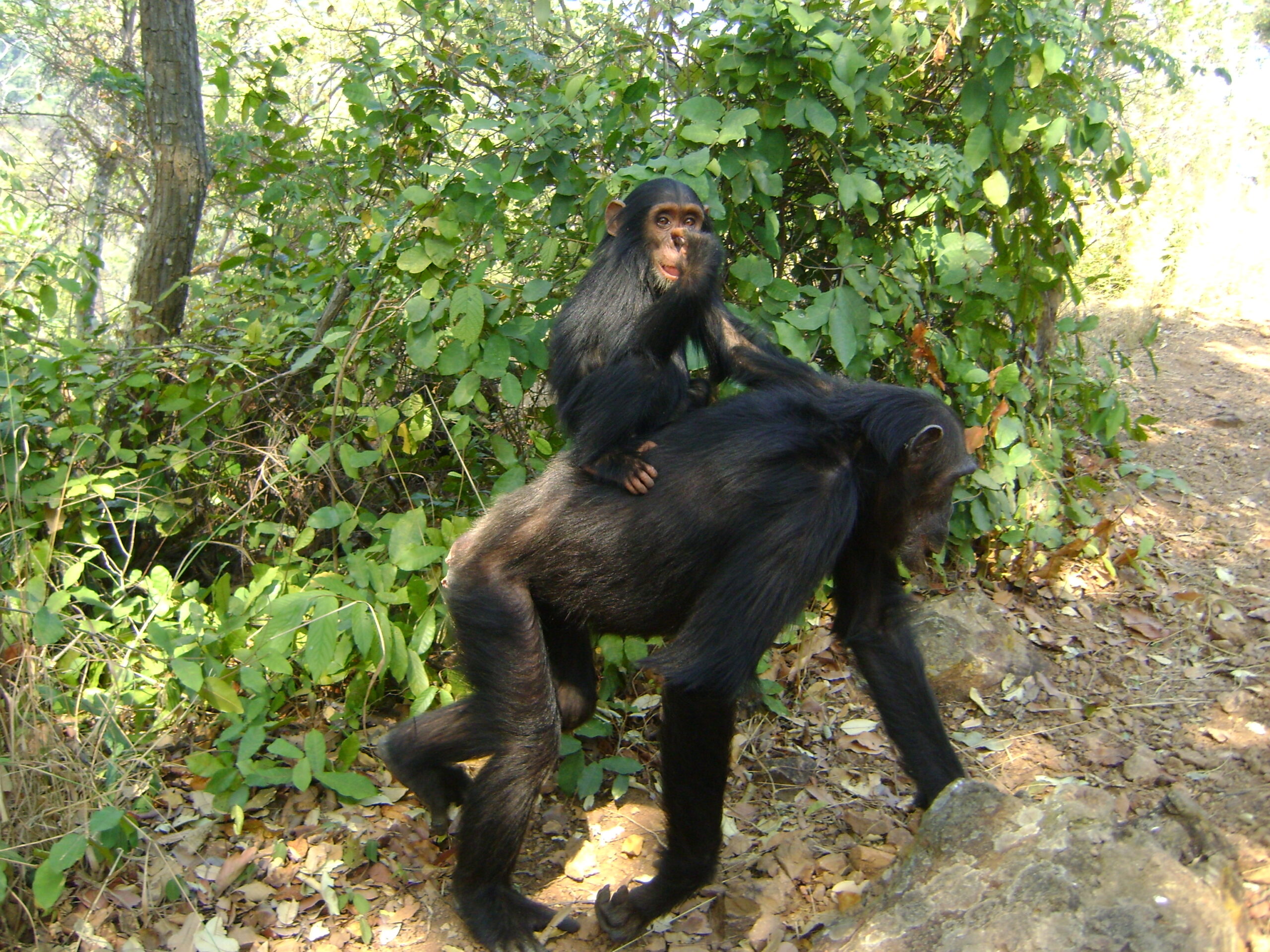
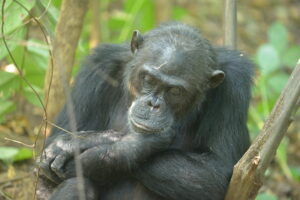
An old chimpanzee known as “Gim” resting on a tree in Gombe reserve in Kigoma region, Tanzania
For his part, Kigoma Council Wildlife Officer, Mr. Alfred Msangi, admitted that despite ongoing restoration efforts, chimpanzees continue to be affected by the pressure of climate change-induced ecological degradation in the reserve. Increased temperatures and the spread of invasive alien vegetation species imperils wildlife conservation.
“Due to their similarity to humans, Gombe chimpanzees do not mate within the same community or household, they seek a mate from another community. Now, due to environmental degradation and the Gombe-Burundi and Kigoma South corridor, male chimpanzees are lacking females, which is causing the threat of extinction of chimpanzees due to a lack of interbreeding,” Mr. Msangi observed.
Msangi says that the natural areas are decreasing for chimps’ migration. He says the Gombe-Burundi and southern Kigoma corridor, which was once used as a route for the apes to move from one place to another to find mates, has been degraded.
History, Displacement, and the Roots of Encroachment
The crisis did not begin overnight. In the 1960s and 1970s, Tanzania’s first president, Julius Nyerere, relocated tens of thousands of people from the Gombe and Shuza mountains into ujamaa villages as part of a nation-building strategy. Soon after, the 1972 ethnic conflict in Burundi sent more than one million refugees into western Tanzania. Many of them later returned home. Others did not.
“After the war, people began farming in the Gombe–Burundi corridor,” Tumuza explains. “Trees were cut for charcoal and farms. Then came more conflicts in Burundi and the DRC and more pressure on these forests.”
For the first time, residents say, apes were hunted and eaten.
“Any animal that made a sound was hunted,” Tumuza says quietly. “Five years ago, we heard chimpanzees crying near the Shuza River valley. Since then, nothing.”
Encroachment, Conflict and Disease
Field data from local government and local NGOs indicate that over 60 percent of deforestation near Gombe and Mahale is driven by illegal small-scale farming and charcoal production. Kigoma Region’s population grew by 37 percent between 2012 and 2022, pushing settlements deeper into wildlife corridors.
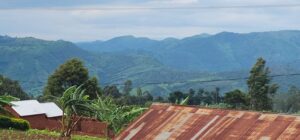
This encroachment does more than destroy habitat. It increases contact between humans and primates, raising the risk of zoonotic diseases.
Marburg Disease Outbreak in Tanzania linked to apes
In 2023, Tanzania confirmed its first-ever outbreak of Marburg virus, a deadly hemorrhagic fever related to Ebola. Health authorities traced the disease to wildlife-human interaction, prompting nationwide warnings against touching or consuming wild animals, especially primates.
Tanzania’s One Health Strategy, launched in 2018 and strengthened under the National One Health Strategic Plan (2022–2027), aims to integrate human, animal, and environmental health surveillance. Supported by the WHO, FAO, and CDC, the approach has improved disease awareness in high-risk communities. But scientists warn that fragmented forests may create new dangers.
In order to successfully implement the plan, the approach is now integrated into strategic plans including the National One Health Strategic Plan (2022–2027), whereby the International technical support from WHO, FAO, CDC, and others have helped establish multisectoral coordination platforms, prioritize zoonotic diseases, and strengthen joint surveillance systems especially given theEbola threat and Marburg outbreak in 2023.
However, the US Centers for Disease Control and Prevention (CDC) is among the US agencies that have suffered significant funding cuts and the loss of financial support as part of the cancellation of foreign aid after the Trump administration reviewed and canceled funding for many programs. USAID has also been affected; the agency no longer exists for all intents and purposes.
As the results of the implementation of the strategy, the integrated human–animal health surveys conducted by TDR under the coordination of WHO in Tanzania showed significant increases in community awareness of zoonotic risks, leading to improved knowledge of prevention such as handwashing, barn hygiene, and protective behavior.
While bats are believed to be the main reservoir, new research from the University of Dar es Salaam and UNEP warns that ape populations in fragmented forests could act as secondary carriers due to overlapping habitats.
Fears of the spread of diseases originating from wildlife, livestock and humans have increased in recent days due to reports from the Tanzanian Department of Health and the WHO warning that the Ebola and Marburg outbreaks are caused by humans interacting with wildlife, especially apes through agriculture and poaching, where sometimes wildlife eats farmers’ crops, especially maize and cassava, and sometimes leaves behind residues that humans harvest and eat without warning of the possibility of contracting infections from these animals.
Voices of Marburg victims and One Health
Members of the Marburg-affected community in Buharamulo Kagera region said that before the outbreak, they had no information that wildlife, especially apes and bats, could cause these infectious diseases but that they have learned lessons despite losing their relatives and friends.
“In our area, especially in Katelela village, when the disaster occurred, we buried our relatives and we did not know the source of the infection, but wildlife officials and the health department gave us a warning and we are paying attention,” said Mr. Henrico Kakwenda, a resident of Ruziba ward, Buharamlo district, Kagera region
Kakwenda notes that initially they were afraid of living near the Burigi-Chato National Park, which is connected to the Rubondo Island Park due to information that primates transmit the disease, and they developed a misconception that they must kill them if they passed through their fields. However, they have received training from the ministry of health in collaboration with WHO, CDC, Unicef and the prime minister’s office about environmental health and relationships with wildlife and are now safe.
A household budget survey (HBS) analysis presented in the One Health Tanzania Strategic Plan, shows that 26.4 percent of Tanzania’s population from 2017 to 2018 lived in poverty, and thus were forced, knowingly or unknowingly, to live in close contact with animals and be at risk of contracting diseases.
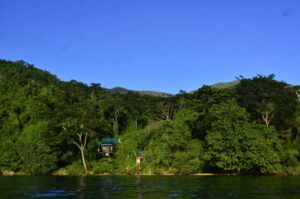
Mr. Peragy Marandu, a conservationist from the Tanzania National Parks Authority (TANAPA) who worked in Gombe for a long time before moving to the Sanane Island Reserve, is concerned about zoonoses. Marandu notes that national parks including Gombe have imposed specific restrictions prohibiting interaction between people and chimpanzees, as well as between chimps and domesticated animals, to prevent the possibility of transmission of various diseases. Marandu noted that in controlling infectious diseases, national parks collaborate with veterinary authorities and the health department to provide education to the communities living on the edge of the park. They also vaccinate livestock, especially dogs, which sometimes enter the park and are at risk of being attacked or risk attacking wildlife.
According to Dr. Anthony Collin, who is a world-renowned chimpanzee researcher in Gombe at the Jane Goodall Institute, says that chimpanzees are in danger of extinction due to communicable diseases, humans and wildlife will continue to threaten them if regulations are not adhered to by local community members, tourists, and ecologists working within the protected area

“Without taking precautions, chimpanzees can contract diseases from humans or livestock entering the sanctuary, it is very easy for chimpanzees to be attacked by severe flu and lose their lives, but also if a chimpanzee becomes infected it is easy to infect humans if there is no barrier to close contact between humans and these animals, so we ensure that everyone observes health procedures when entering the sanctuary,” Dr. Collins emphasizes”.
Conservation Under Strain
Government officials acknowledge the scale of the challenge.
Vincent Mhezi, Kigoma Districts Natural Resources Officer, said that the council plans to plant 1.5 million trees annually and remove protected forest invaders. Yet funding gaps remain severe.
The recent decision of US President Donald Trump to cut off foreign aid to most countries and related development projects, including those coordinated by USAID, is one of the risks facing various sectors. Forest and wildlife conservation in the African region, including Tanzania, are no exception.
The protection and improvement of the southern and northern corridors of the Gombe Chimpanzee Reserve are among the environmental projects that have been particularly affected by the US aid cuts.
“Many restoration activities have stopped,” Mhezi said. “We are now relying on local revenue, which cannot meet the scale of the problem.”
The government, through various stakeholders, intends to continue to encourage communities to come forward to provide funds and manpower in the environmental and wildlife conservation and security sector, so that the sector can continue to contribute to ecology and community development, thereby eliminating dependence on the US government alone.
Alfa Haga (65), a resident of Nyarubanda village in Kigoma region, which borders the Gombe-Burundi corridor, admits that unlike in the past, environmental policies these days involve community input.
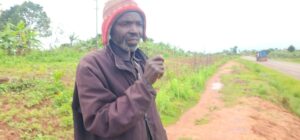
He admits that due to the existing cooperation between conservation authorities, local governments, wildlife researchers and citizens living in areas surrounding national parks, community-based conservation has been productive, although the concept is being implemented when there are already harms.
“We citizens have absolutely no problems with wildlife, education has been provided and even when the community sees a gorilla leaving the park and entering village areas or on farms, we quickly report it to the authorities and they come and return them to the forest without causing harm,” Mr. Haga stressed.
Reports of the continued decline of chimpanzees in the Gombe National Park are affecting citizens due to the threat of the withdrawal of funds for development projects that were funded by money from the conservation authority to tourism revenues.
The Numbers Tell the Story
| Indicator | 2010 | 2024 | Change |
| Estimated chimpanzee population (Tanzania) | ~3,500 | ~2,200 | ▼ 37% |
| Annual deforestation rate (Western Tanzania) | 0.6% | 1.4% | ▲ 133% |
| Reported human–ape conflict incidents | 21 | 63 | ▲ 200% |
| Conservation funding reaching communities | 18% | 9% | ▼ 50% |
Source: TAWIRI, UNEP, Jane Goodall Institute, TANAPA, InfoNile (2024)
LISTEN PODCAST IN KISWAHILI
Hope From the Ground Up
Despite the bleak outlook, local innovation offers hope.
Community-led Forest Guardian Networks in Kigoma are using mobile phones and cameras to report illegal logging and wildlife sightings. In areas where communities are actively involved, forest loss has slowed by up to 20 percent since 2021.
Open-data mapping projects led by Code for Africa, InfoNile, and TAWIRI are helping policymakers and villagers visualize forest loss and ape migration routes in real time.
Yet conservationists agree: protecting great apes is no longer just a wildlife issue. It is about livelihoods, health, history, and who controls the future of Tanzania’s forests.
Tanzania’s National Chimpanzee Conservation Action Plan (2018–2028) outlines strong goals for habitat protection and disease surveillance. Yet, on the ground, communities say they are rarely consulted or included in implementation.
Unless conservation moves from policy papers to community hands, the echoes of Gombe’s forests may soon fade into permanent silence.
This story was produced by Prosper Laurent Kwigize in support from Earth Journalism Network and funding from Internews .
It was first aired on Buha FM Radio In western Tanzania on January 15, 2026 and published on Community Radio Network of Tanzania Portal on January 16, 2026 in Kiswahili Language