
A story from Prosper Kwigize, Tanzania Correspondent
Tanzania is experiencing accelerating impacts of climate change, including rising temperatures, intensified extreme weather events like droughts and floods, rising sea and lake levels, and increased food insecurity.
Projections indicate further warming and more heat waves in some areas, with extreme weather becoming more frequent and severe. These changes are causing damage to infrastructure, internal human migration, threats of wildlife extinction, impacts to hydroelectric power, threats to water supply through saline intrusion, and significant crop failures.
Social media is reshaping how communities understand climate change, but information posted on the platforms is not always accurate. While various youth-led groups are spreading awareness and implementing local solutions, a wave of misinformation threatens to blur the lines between truth and falsehood, leading to distorted decision-making and social unrest.
According to a 2025 report by Afrobarometer, even though there has been some improvement since 2022, only 38% of Tanzanians have heard of the term climate change. This shows a significant gap in public knowledge that makes it easier for false information to spread.
The Tanzanian news website, The Chanzo, notes that journalists reporting on climate issues in the country have limited knowledge and are unable to access statistics or experts, adding to the confusion for the community and making it impossible to rely on the information provided by the press.
As you scroll through Tanzanian social media, you’ll find two different perspectives on climate change.
On one side are grassroots organisations like Climate Hub Tanzania, whose Instagram posts show young people from across the country planting trees and holding workshops to promote clean energy, protect the environment, and discuss solutions under the Swahili hashtag #MabadilikoYaTabianchi. Their posts, like this one from the Energy Transition workshop, celebrate local innovation and the power of informed youth action. The organisation portrays the youth as potential partners to influence the entire community about climate change adaptation and fight against fake news.
But just a few clicks away, other posts tell a negative story about climate change.
On social media platforms such as Facebook and WhatsApp, misleading narratives are spreading rapidly, especially claims that floods are “natural disasters,” or that “climate change is a Western excuse to prevent Africa from developing.” These narratives permeate society, causing panic and fear, but they misrepresent science and distract society from the urgent need to respond.
The United Nations, through Sustainable Development Goal 13, emphasises the importance of ensuring urgent and sustained action to address climate change to protect the environment and biodiversity. The World Bank has also been advocating for the implementation of SDG 13. However, the lack of a single voice fueled by the negative use of social media to spread misinformation and fake news is hindering or undermining the implementation.
COMMUNITY DEBATE ON ENVIRONMENTAL IMPACTS
While citizens lack accurate information about climate change, a video posted by the Tanzania Development Trust on Facebook shows farmers talking about droughts and erratic rainfall in various parts of East Africa, providing direct evidence that climate change is real and devastating. BiovIntCIAT’s post on Hanang farmers in Tanzania documents how rural farmers are adapting by exchanging seeds and local knowledge to ensure reliable harvests while making the most of the rainy season by growing drought-tolerant crops.
Pages such as Emac Tanzania and Inades Tanzania ask “How can farmers address the options and challenges of climate change?” using language that connects directly with local farmers. Such stories provide clarity, but are often drowned out by misinformation claiming the effects of climate change are hoaxes or blaming government projects for the bad weather, without evidence.
Kiswahili-language posts highlight the promise and perils of climate communication in Tanzania. Such posts sometimes mix fact with unsubstantiated speculation about the reality of climate change and its impacts. For example, people may attribute failed harvests to divine punishment, rather than environmental factors.
The Hanag flood and landslide in Manyara region is one of the real examples where readers on social media attribute these events as punishment from God, and others attribute them to political issues. One of the contributors on Milard Ayo’s page, Rajabu Mauya, in his comment, says, “God is not sleeping”, suggesting that God is the one who brought the disaster. “This is a sign that Allah (God) exists, He does not die and He does not sleep, Let us fear Allah and fear Him, surely to Him we will all return,” he wrote.
Rajab’s comment reflects the widespread belief that the environmental disasters are God’s plan and are not related to the effects of climate change, and that if humans obey God, there will be no such disasters.
Other contributors to the story appear to ignore what happened and use the page to advertise herbal medicine businesses, with many posting jokes.

Screenshot of the comment by Rajabu Mauya under Millard Ayo’s post.
RBS Mabati (named after an iron sheet company) references the story of a man who saved himself by grabbing a cow’s tail and says, “Don’t eat cow’s tail soup again”. Other comments, such as the one from Martha Chaz, attribute the landslide disaster in Mount Hanang and the floods in Katesh town to having happened by God’s will.

The dissemination of various images and videos showing the magnitude of the disaster is a method some have adopted to spread awareness to the public and save lives. On the Facebook page of Journalist Scholastica Mazura, she published various videos from Kateshi, helping the community to recognize and build a real picture of the environmental impacts.
In the picture below, a Facebook contributor on Mazura’s page named Justine Ghuliku says “Sanaa,” suggesting that it’s not a real event, but rather something fictional.

If there is continuous education about environmental conservation, proper land use, urban planning and sustainable agriculture, it will be a powerful tool to prevent avoidable environmental disasters.
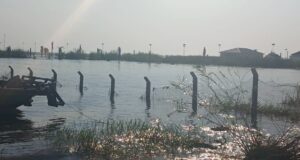
The floods in Lake Tanganyika are another example of the effects of climate change and the spread of misinformation. The community and the government have both suffered losses following the destruction of infrastructure in the Kibirizi, Ujiji, Ikola and other ports. However, when citizens were warned through the Facebook page of the ITV television station, comments related the floods to God and others connected it to political issues, saying “Go and Vote for Kizimkazi”, meaning “Re-elect President Samia Suluhu Hassan, who is Kizimkazi in Zanzibar”.
In the screenshot below, the first commenter, David Jeremiah, distorts scientific findings about the flood and its cause by convincing readers that it is a normal phenomenon and that people should believe in God and not fear death.

David Jeremiah wrote in Swahili: “If we have faith that God is the one who heals, revives, makes living creatures alive or die and death does not obey pressure except pressure from us humans, let us say thank God, the Almighty, thank Him and obey all the prophets and apostles of righteousness that He sent to represent Him on earth. Let us keep His commandments. It is not a time to fear death, it is a time to build faith in the one who is above death and everything. We will live forever in hope. John 3:16, John 17:3, John 14:28-29, John 20:17-18.”
This means that religious beliefs often prevail over scientific facts as people are convinced that God is the one who brings disasters and can prevent them.
It shows how local languages, while important for inclusion, can also be easy targets for distortion when scientific terminology is misinterpreted or politicised.
On Tanzanian social media, three main trends of climate change misinformation are evident in several areas. One, there are Denial Narratives that claim climate change is a “Western agenda” or “natural”. Another area is the Displacement Narrative, which largely blames unrelated local events (such as port construction or deforestation alone) as the sole cause of the floods, ignoring the broader climate system. Other narratives involve religious beliefs and ancient history or conspiracy theories, suggesting that cloudbursts, “chemtrails,” or spiritual punishment are causing the drought and rising sea levels.
Such claims often come from social media influencers or unverified pages that mix climate issues with politics or religion. Because social media algorithms reward emotional content, these posts spread faster than factual reports.
There are also instances of media outlets writing news on the topic in an incorrect manner, instead of providing education on precautions and rescue. For example, Radio Joy refers to fatalities caused by floods as “death by chance”. There is a need for journalists and media stakeholders to get more resources to counter misinformation.


In the picture above, one comment from Novatus Martine says it is the election year. In Tanzania, citizens have been associating disasters such as road accidents, earthquakes, floods and others that occur during election periods with superstitious beliefs, believing that they occur due to politicians making sacrifices.
MISLEADING CLAIMS ABOUT PORT INFRASTRUCTURE
Kibirizi Port in Kigoma was one of the ports whose foundation stone was laid by President Samia Suluhu Hassan in 2023. Yet the site had long been identified as vulnerable to flooding due to rising water levels in Lake Tanganyika.
Officials publicly praised the construction as part of President Samia’s strategy to open up Kigoma and link Tanzania to the global economy. Kigoma Port Manager Edward Mabula and Transport Minister Professor Makame Mbarawa celebrated the developments, even as floods damaged the sites. The minister continued to tout productivity in the submerged port, turning the project into a political showcase while concealing the truth.
Reports by Deutsche Welle and other media revealed that the ports were damaged during construction, and environmental experts said authorities ignored proper environmental assessments. Officials from the Tanzania Ports Authority (TPA) deflected blame, calling it a “natural disaster,” while critics pointed to design flaws and violations of environmental regulations.
Despite growing evidence of failure, government narratives — including statements on President Samia’s official Instagram page — falsely claimed that the ports were successfully operating. In reality, the facilities at Ujiji, Kibirizi, Ikola, and others were submerged and unusable. Officials insisted that flooding was temporary, dismissing environmental warnings as alarmist. These misleading claims delayed corrective action, ultimately causing losses estimated at 32 billion shillings.

Environmentalists and the Lake Tanganyika Basin Authority confirmed that their experts were never involved in the planning process. Studies showing rising water levels since 2019 were ignored, and construction continued even as damage worsened. When questioned, government outlets like Daily News attributed the destruction solely to climate change, avoiding any admission of negligence or poor design.
Opposition politicians, local communities, and independent journalists accused officials of hiding the truth and using the failed projects for political gain. Fishermen and traders now suffer the consequences, with unusable infrastructure and ruined livelihoods. Experts argue that proper Environmental Impact Assessments would have identified the risks, but political interests and misinformation prevailed.
Today, the flooded ports of Kigoma stand as stark evidence of how propaganda, negligence, and the suppression of environmental expertise have turned a development vision into a national loss.
WHY PEOPLE BELIEVE FALSE STORIES
Experts say misinformation thrives where there is little trust and limited access to accurate information. It is worsened by the spread of propaganda on social media by politicians or specific disinformation groups.
In rural areas of Tanzania, where education and media and internet access are not as equal as in urban areas, people often rely on WhatsApp messages sent or short videos for “news”, without training or verification skills.
Fake news can feel just as credible, especially when it comes from friends or church groups.
Various beliefs, including religious and superstitious ones, influence the public to attribute the effects of climate change to God or other supernatural forces.
Rampant climate disinformation or misinformation in the media is distorting dangers and delaying climate action. This brings the need to counter climate disinformation through media and information literacy.
The people must be encouraged to push back against harmful social norms contributing to climate change. This is to be done through amplification of local perspectives, stories, and knowledge.
On the ITV YouTube channel, leaders were shown discussing the impacts of climate change following the emergence of a significant increase in the water level of Lake Tanganyika, which caused flooding and damage to road infrastructure and the sinking of ports. The report shows one of the citizens accusing the government of failing to comply with environmental regulations in the construction of infrastructure and blaming that negligence or deliberate negligence has caused the nation to lose money and citizens to lose their capital.

Commentators, however, show a disdain for what is being explained as environmental impacts, attributing the events instead to electoral conspiracy and divine decree or intervention.
The 2023 Climate Journalism in East Africa in an Era of Misinformation report found that disinformation is often unintentionally spread by well-meaning people who don’t understand complex issues. But disinformation – the deliberate spread of falsehoods for clicks, political gain, or attention is also on the rise.
COUNTERING DISINFORMATION
Amid the confusion, several organisations are pushing back with credible, community-driven climate stories.
- Sustainable Agriculture Tanzania (SAT) trains farmers on agroecology and soil management.
- Azam TV’s Swahili video educates the public about adapting sorghum farming to climate change.
- United Nations Water highlights Tanzanian communities on the “front lines of climate change,” showing solidarity across global rural areas.
These examples prove that when local organisations control their narratives — in Swahili and through relatable visuals — truth can travel as fast as lies.
The research and advocacy work, however, comes with challenges. Many Tanzanian journalists covering climate stories report that they face verbal abuse, legal threats, online harassment, and threats of physical violence.
Combating disinformation requires more than fact-checking by building sufficient knowledge in the community about climate issues. The equipped people will be able to assert their voices, resist fake news and challenge misinformation publicly.
Journalists, teachers and local leaders must use understandable Swahili language stories that are relevant to local data. Radio stations like BUHA FM and social media platforms can play a key role in countering myths before they are disseminated.
Media professionals can also collaborate with youth influencers like Climate Hub Tanzania to co-create proven and engaging digital content that informs rather than misleads.
Social media has enabled democratic climate communication in Tanzania – but also democratic deception. To ensure communities act on facts, not on fear, we must strengthen fact-checking, support science communication in Swahili, and celebrate platforms that tell the truth.
As one farmer from Hanang said in a Facebook video: “We can’t stop the drought, but we can understand it and that’s where hope begins.”
The government and the international community have a shared responsibility to increase public education so that society has sufficient understanding of environmental conservation issues, effective land use, climate change and its impacts, as well as how to respond to the relevant impacts.
This article was produced with mentorship from the African Academy for Open Source Investigations (AAOSI) as part of an initiative by the Ministry of Foreign Affairs of Norway and Code for Africa (CfA). Visit https://disinfo.africa for more information.